
Project Details
Name: Understanding Online Friendship
Client: Samsung Mobile/Global UX Studio
Team: Soley me
Type of Project: Quantitative Survey, Online Ethnography, Workshop
My Role: UX Researcher, Workshop Facilitator
Timeline: 3 months
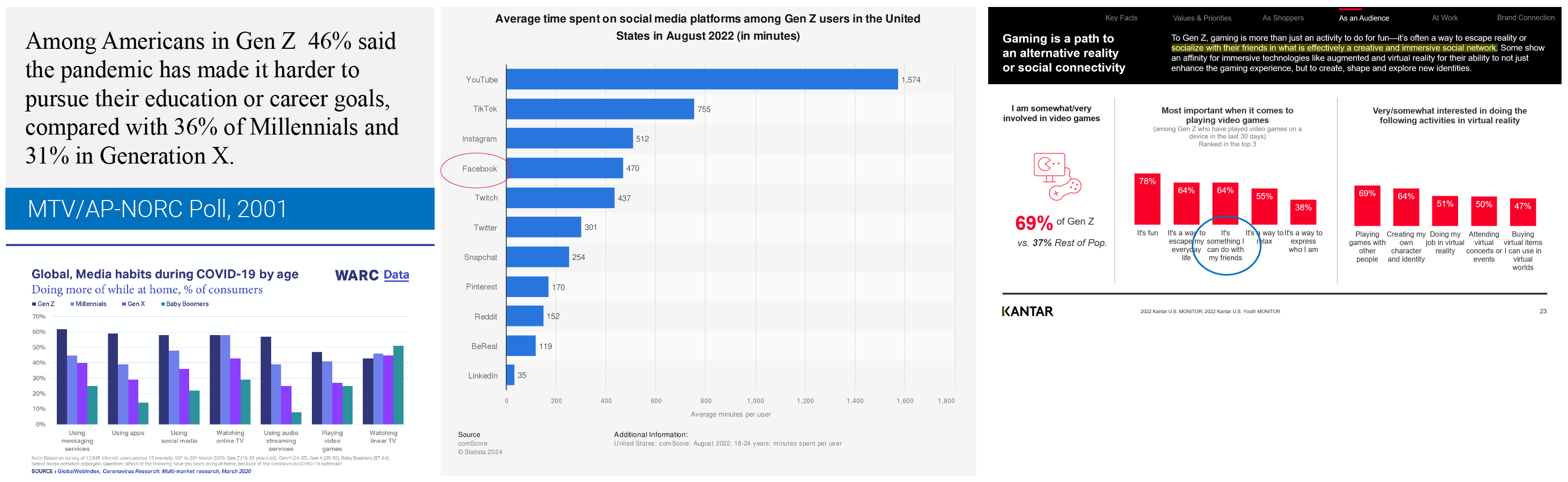
One of the Global UX Studio’s mission is to discern evolving consumer interaction trends, particularly among Gen Z, to inform Samsung Mobile’s strategies. I noticed shifts toward unconventional online friendship-making methods (e.g. using online gaming to make friends), compounded by COVID-induced isolation and Gen Z’s departure from established social media platforms prompted me to investigate online friendship dynamics and their potential impact for Samsung Mobile.
Signals that online friendship and Gen Z could be a new area of exploration.
Process
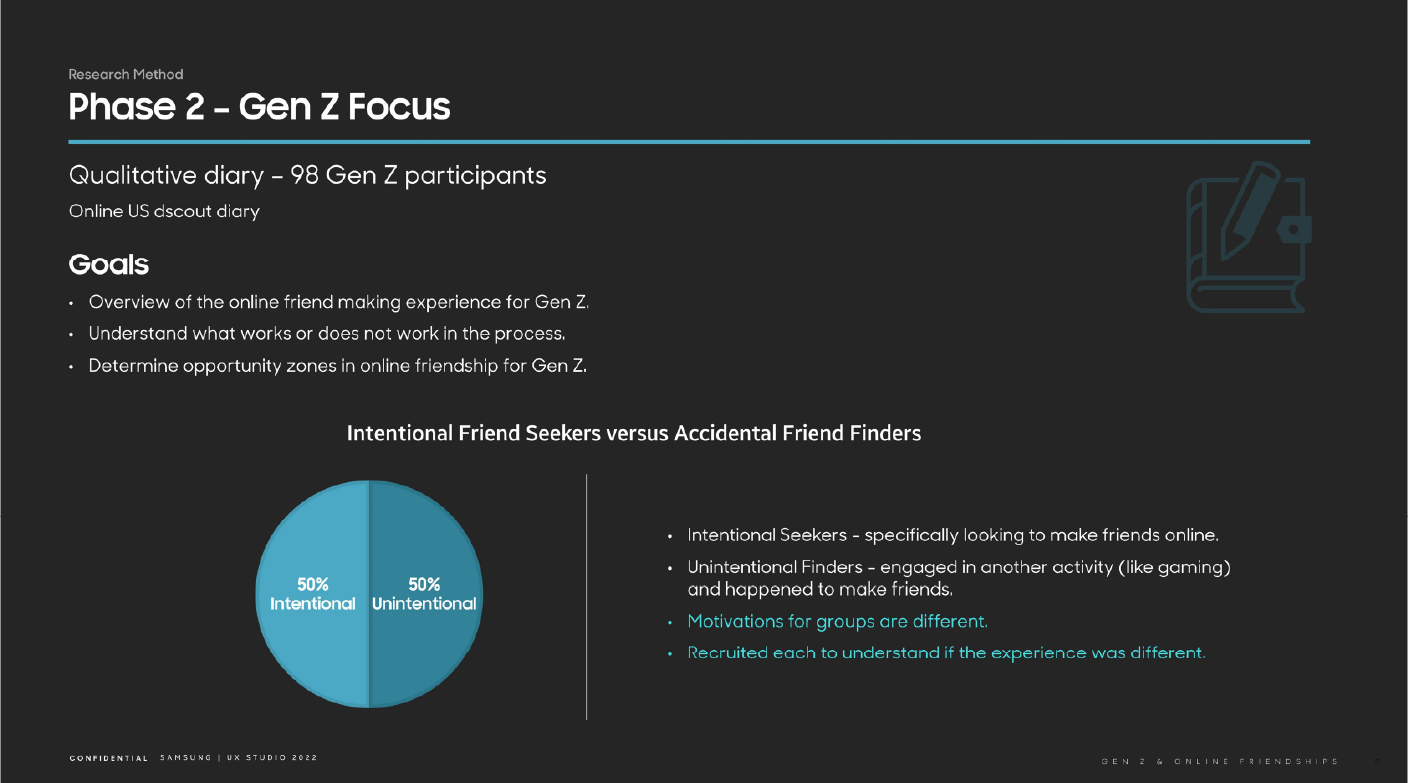
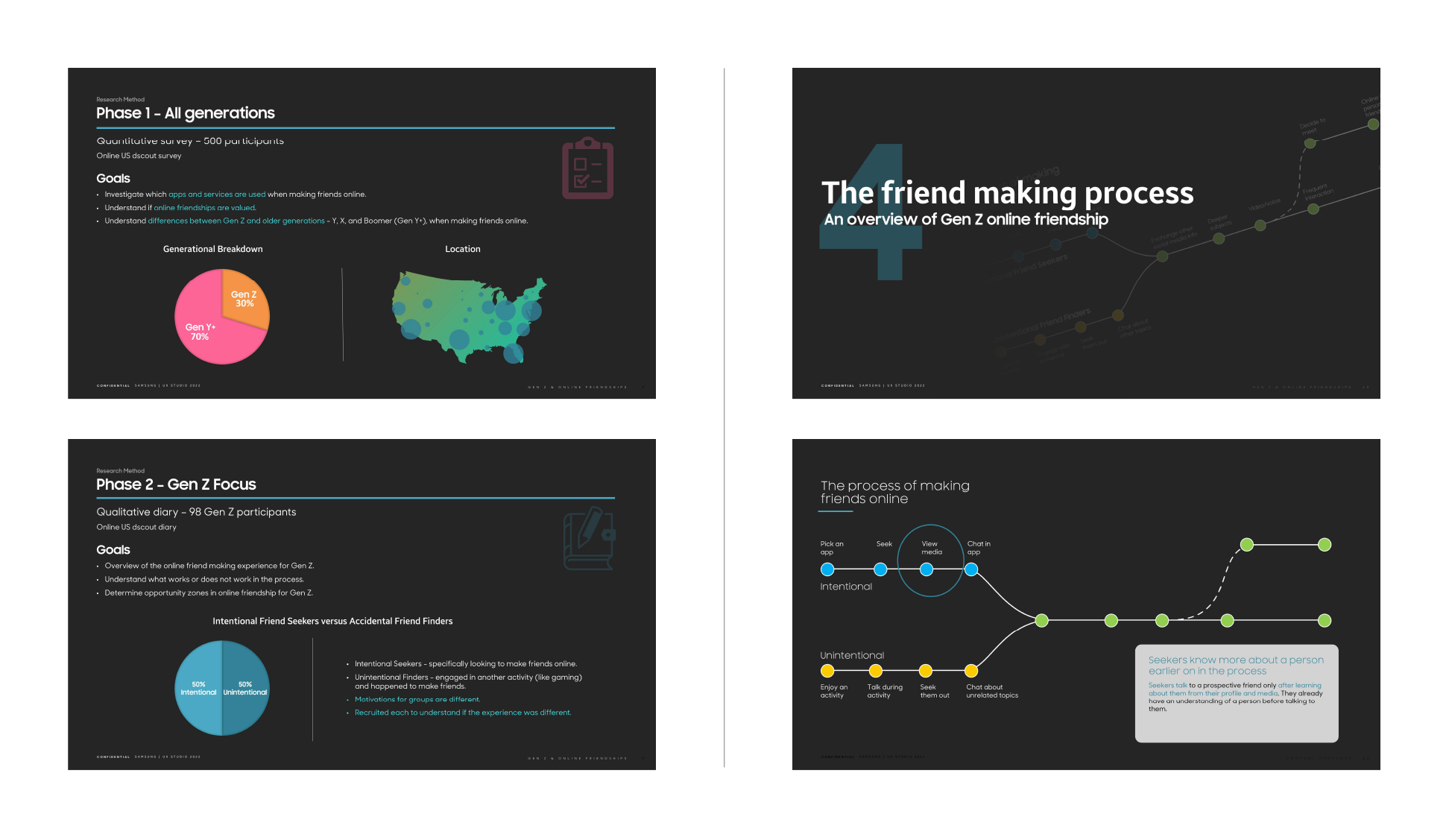
The research was broken down into two phases. The first phase was a 500 person quantitative survey, followed by a second phase of qualitative diaries. Phase 1 was designed to understand the landscape of online friendships – patterns, app usage, and generational differences. It also acted as a recruitment tool for the second qualitative phase or research. The second phase was structured to get a deeper understanding of values, motivations, hopes, and concerns for online friendships. Both phases leveraged dscout as the recruitment and data collection tool.
Details of Phase 1 and 2 from the report
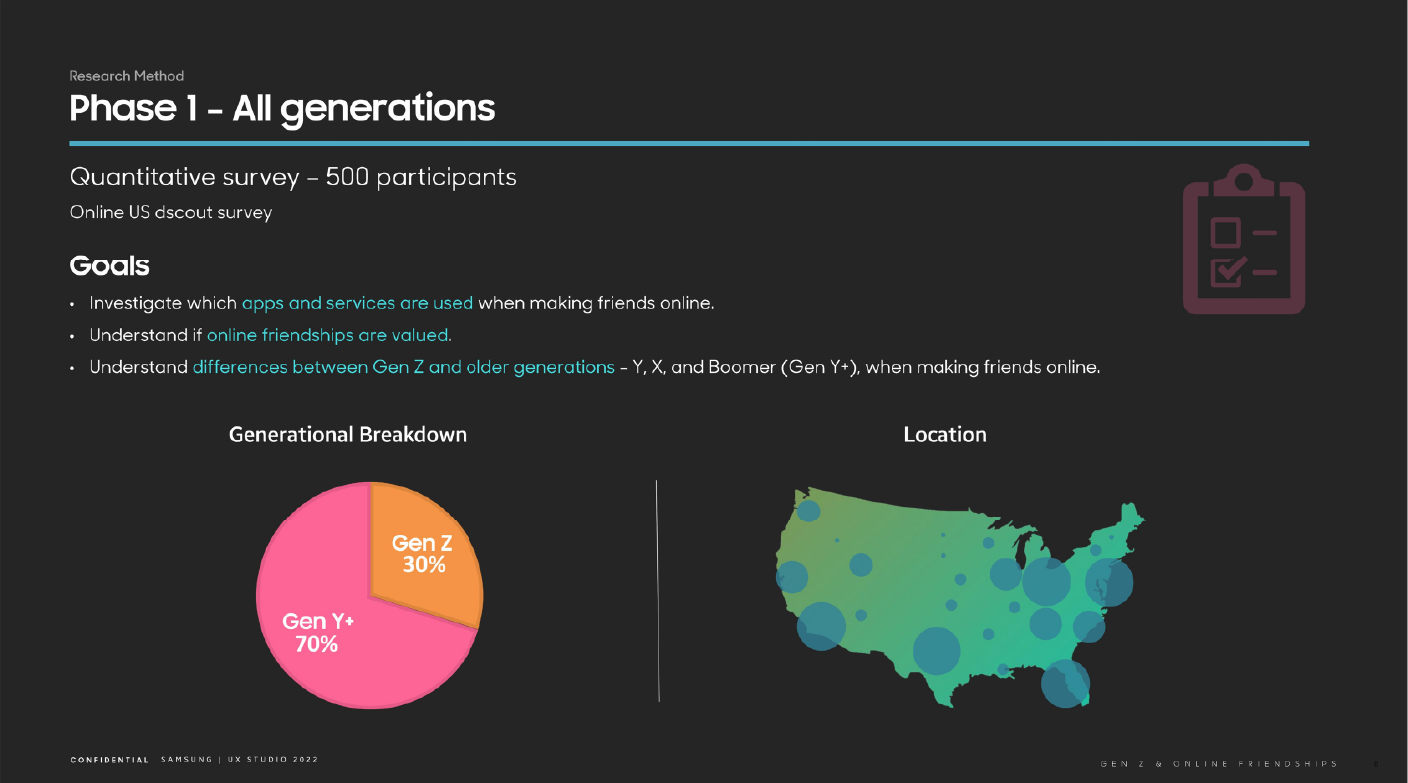
Phase 1 Research Goals
- Identify apps/services used for online friendship.
- Assess the ease of making online friends.
- Determine the value of online friendships.
- Understand perceived differences between online and in-person friendships.
- Explore generational differences in online friendship perceptions.
Phase 1 Findings
Gen Z values online friendships more than other generations. 45% of Gen Z’s responses indicated that online friendships are important to them, in comparison to just 36% of Gen Y+ (Gen Y/X/Boomer). Other than Gen Z eschewing Facebook for other social media apps, that was the only major difference. This locked in my focus on Gen Z for phase two of the research, not only do they values these relationships, Samsung places a high priority on them as a demographic.
The other big finding is that there are two distinct groups of friend makers: intentional friend seekers (utilizing friend-making apps) and accidental friend finders (forming friendships during other online activities). Intentional friend seekers used apps with the specific intent on meeting people (Bumble BFF, for example). They have the ability to look at profiles and media to quickly determine if they want to pursue the relationship – it’s accelerated friendship formation.
Accidental friend finders make friends while engaging in other activities like gaming or talking in online forums. Over time, these people talked/chatted during the primary activity and grow closer. Eventually the relationship extended beyond the primary activity and they begin seeking each other outside the original activity.
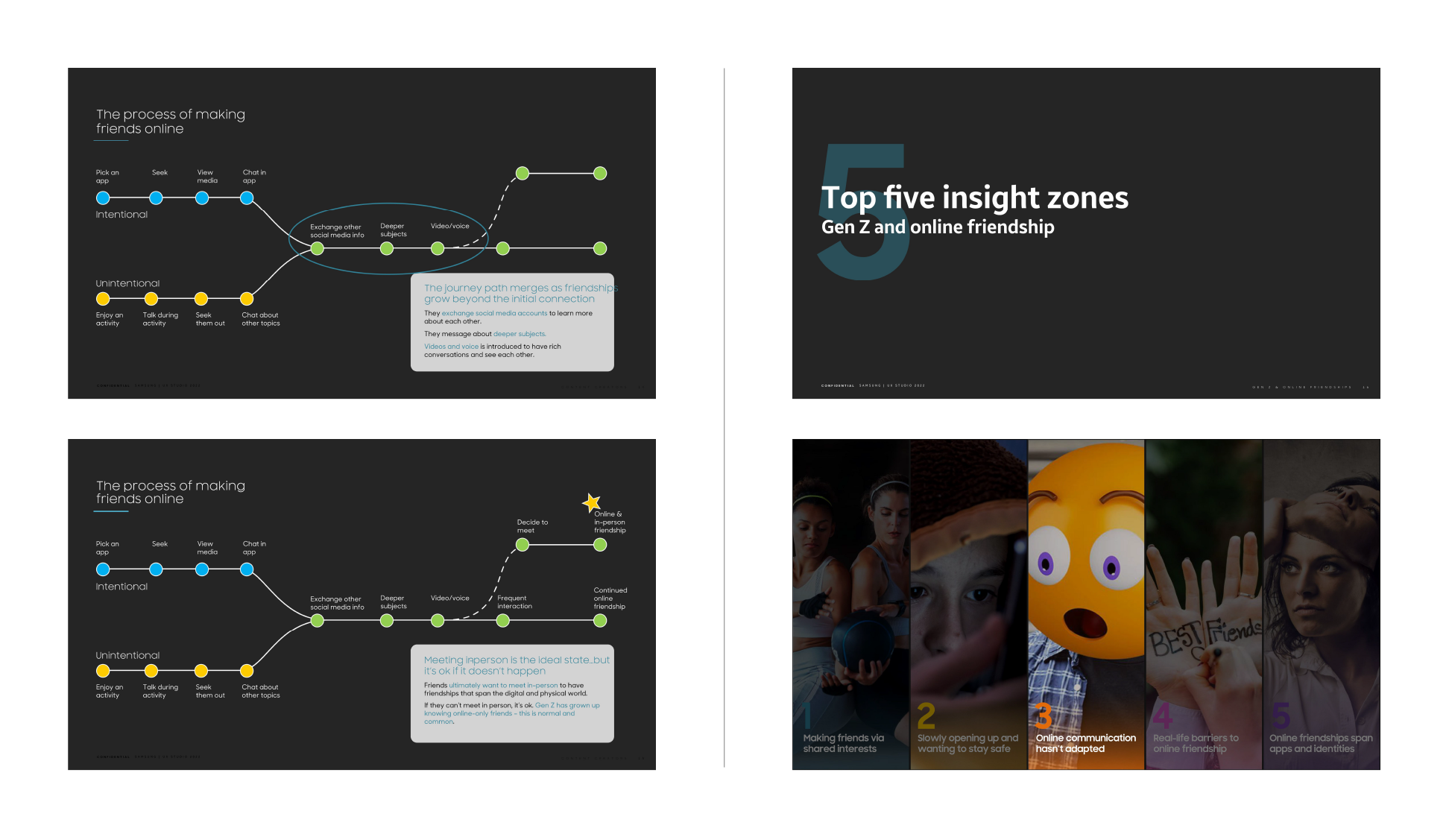
After the friendship forms, both groups act in the same way, exchanging social media accounts, talking about deeper subjects, and having more frequent interactions. Both groups would love to meet their friends in real life, but they’re happy to continue the friendship online if that’s as far as it goes.
The online friendship journey.

Phase 2 Goals
- Examine the value of online friendships.
- Compare the ease of making online vs. in-person friends.
- Identify differences between online and in-person friendships.
- Understand how online friendships evolve over time.
- Explore challenges in maintaining online friendships.
Phase 2 Findings
The participant diaries took me through the process of making friends online – the pitfalls of online friendship, high points, and what they hope for the future with their friends. I used dscout’s tagging and quote bookmarking features to categorize key themes. I exported the tagged information and quotes from dscout into an Excel file that I parsed with formulas to combine information into cells which could be easily exported to Miro for affinity diagramming.
Analysis in Miro
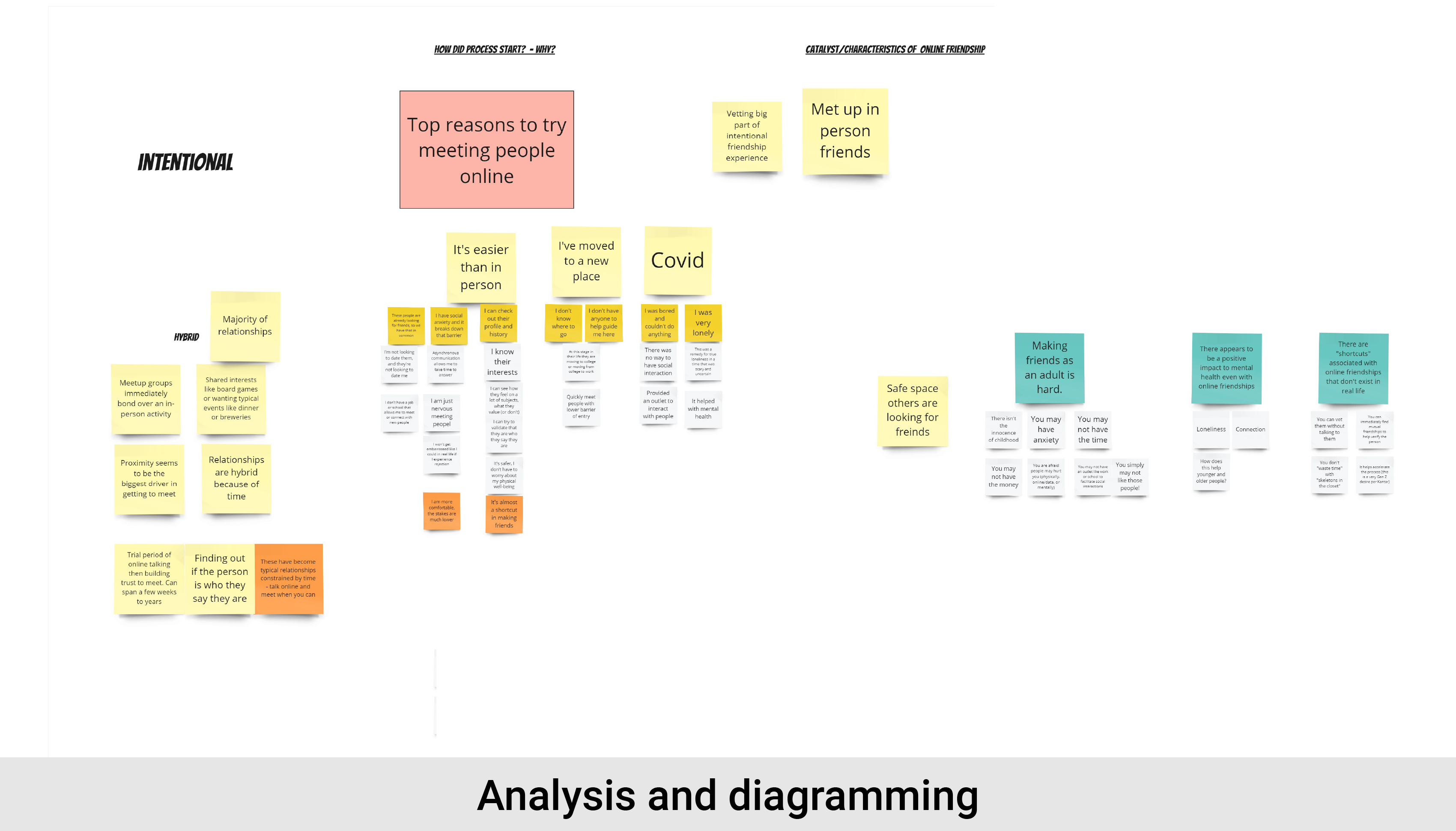

Phase 2 Themes
- Shared interests are at the core online friendships.
- Wanting to be open and expressive but worrying about safety.
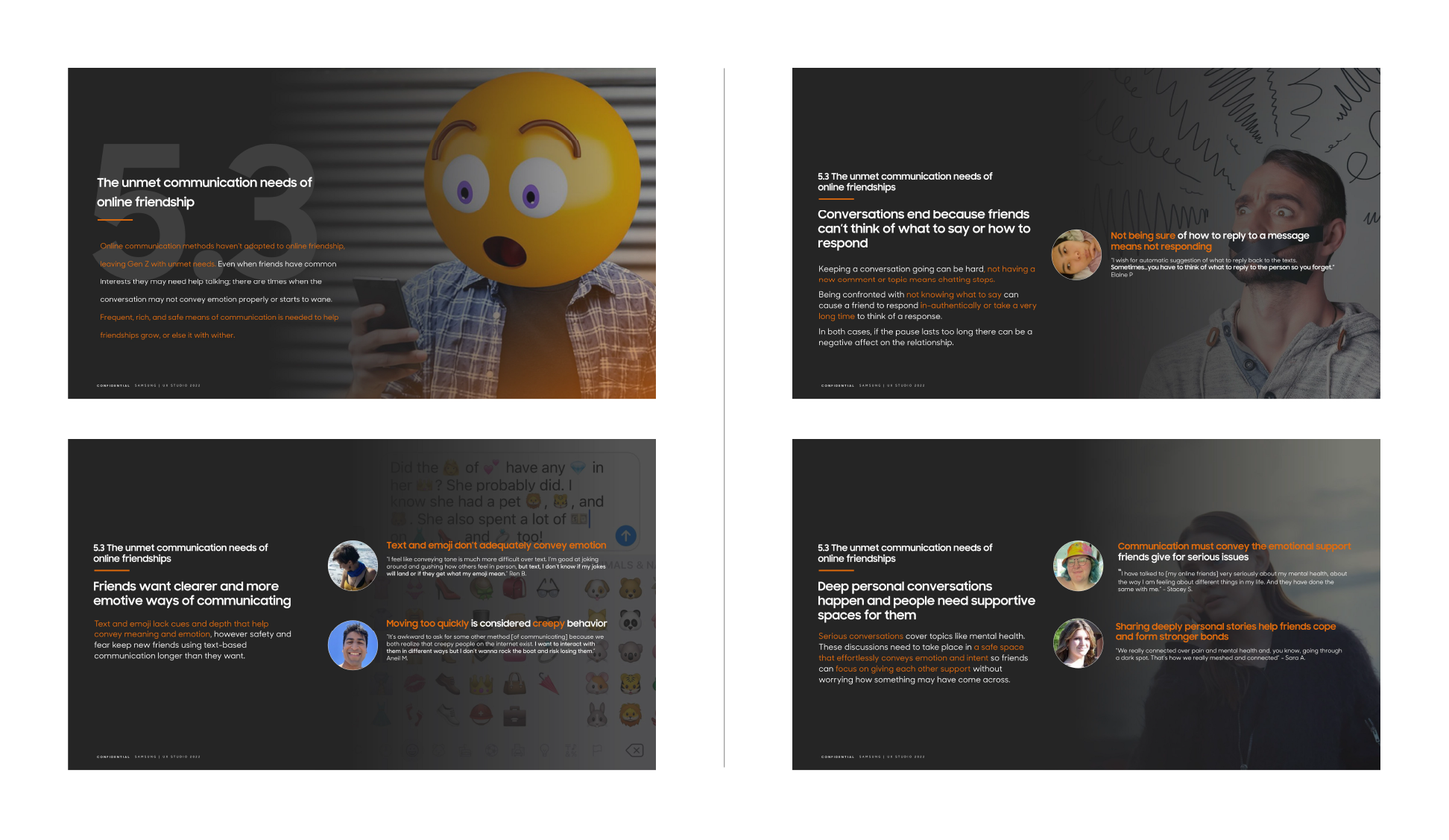
- Online communication methods haven’t adapted to online relationships.
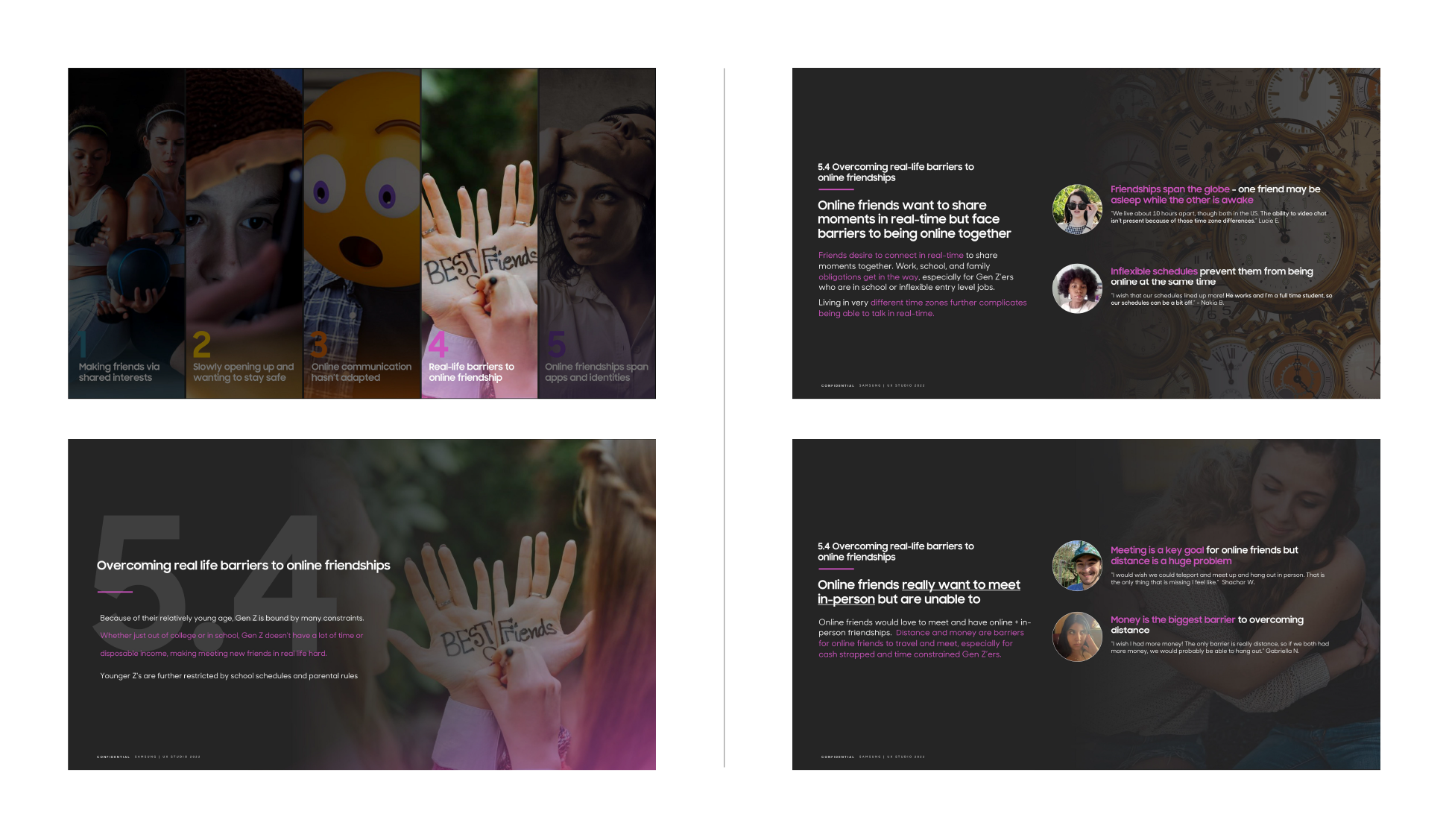
- The real-life barriers to online friendship.
- The impact of online friendships spanning multiple apps and online identities.
One of the more surprising findings was that people who maintain solid online friendships don’t mind that they may never meet their friend. They would love to meet their friend, but they are happy with online companionship and value the relationship.
Presentation and Workshop
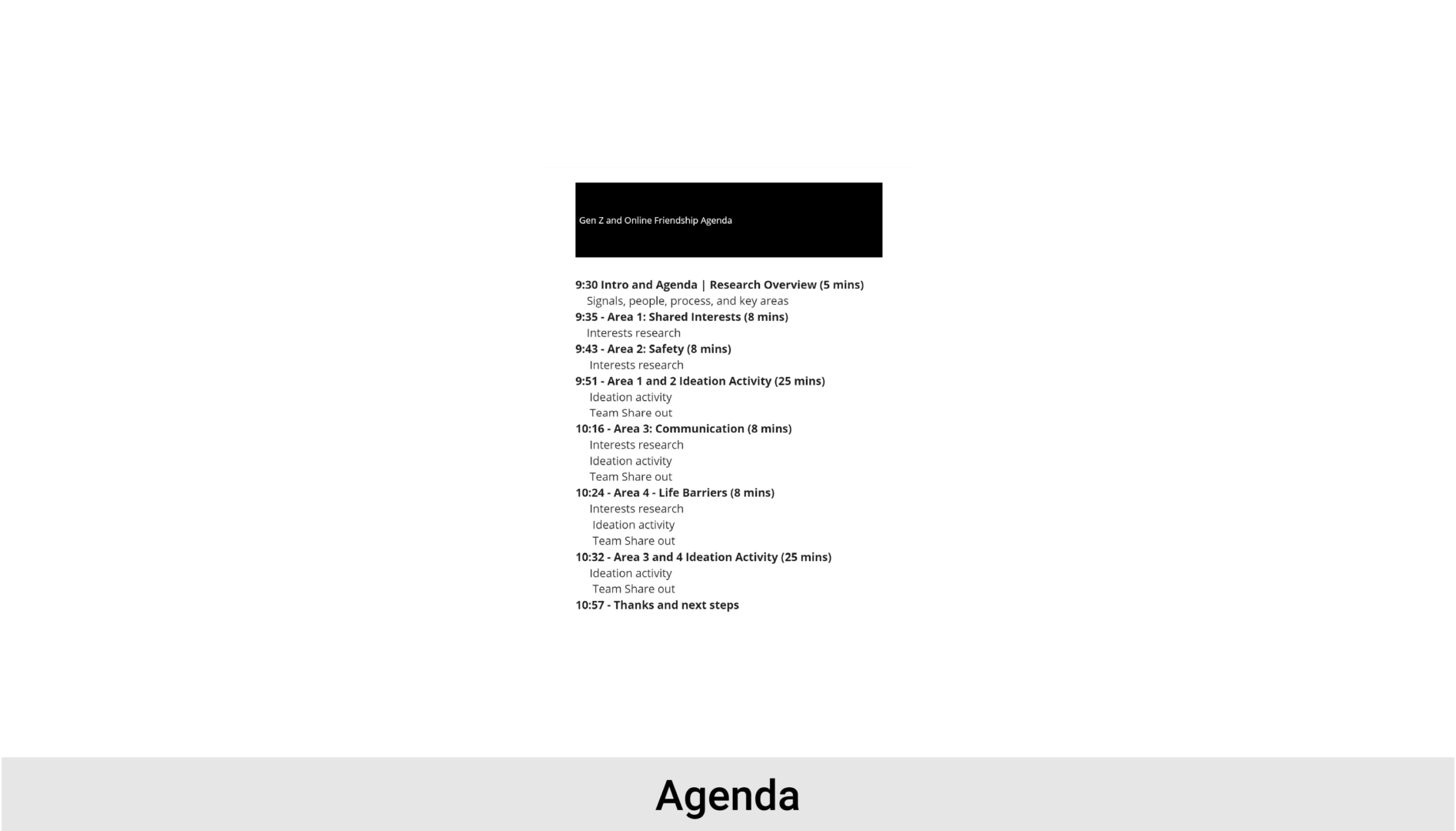
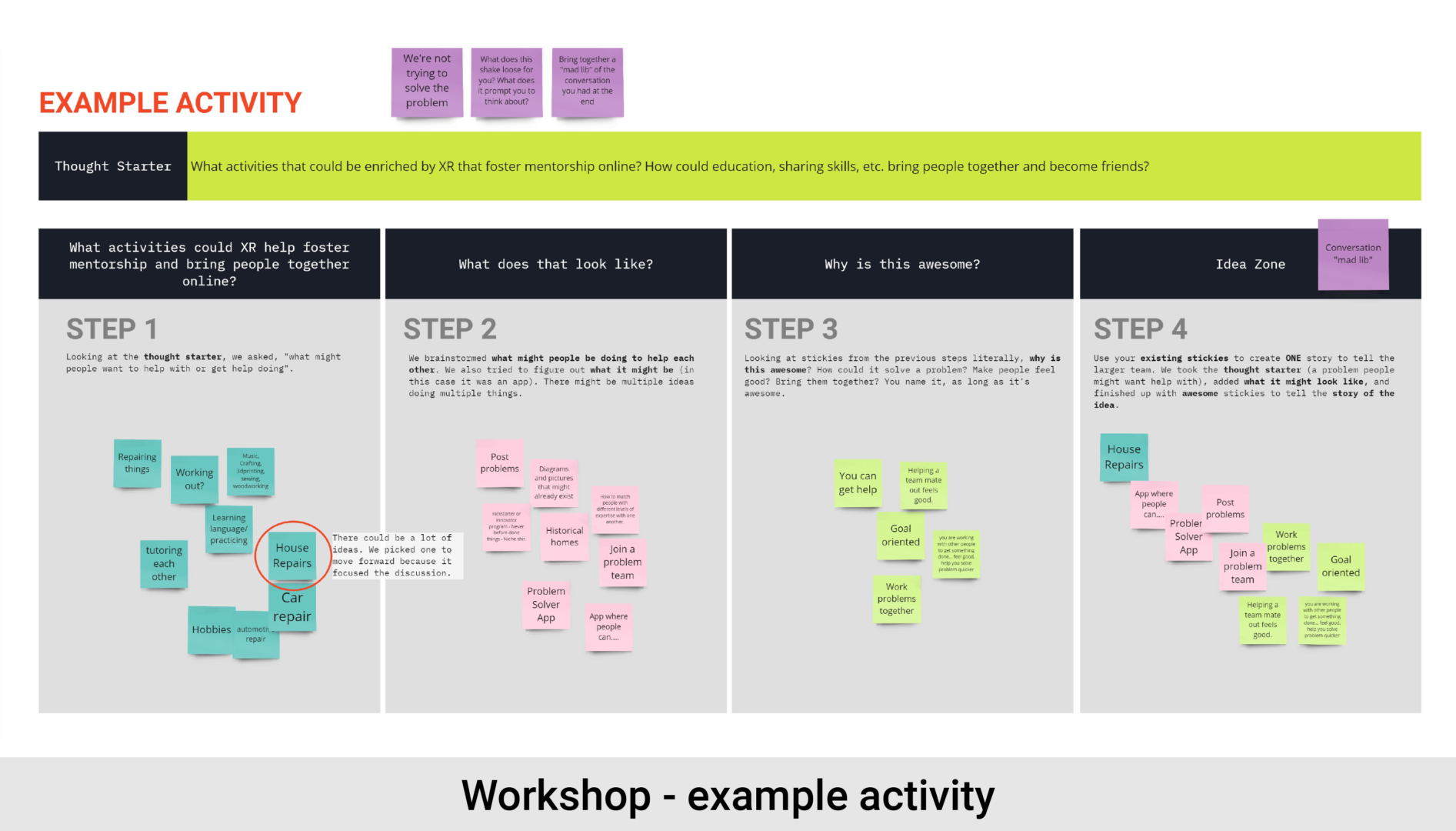
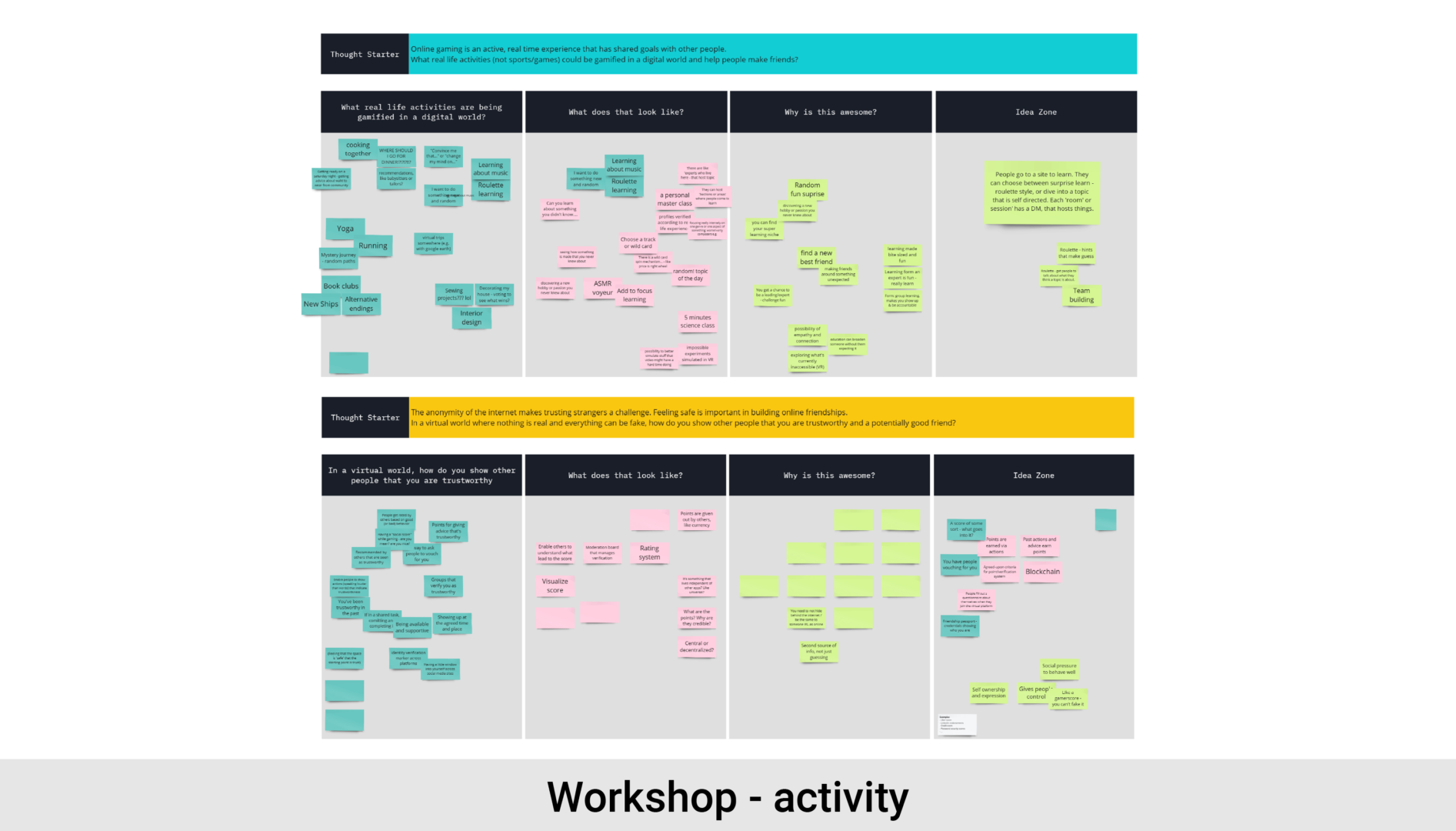
The first presentation was to the design team I work directly with. It culminated in a workshop in which we progressed through four stages of ideation to generate ideas, refine them, articulate why the idea is beneficial to users and to Samsung. We then created a pitch about one idea back to the larger team. In the time we had, we were able to work through two rounds of ideation, which enabled the groups to either brainstorm against or listen to pitches for ideas in all of the five key themes. Those ideas and the original presentation were then presented to the broader Samsung Mobile team in Korea.
Workshop agenda and activities
Outcome
The report acted as a catalyst that spurred two new streams of investigation. The first was a request from the team in Korea, focusing on how people manage and present multiple online identities. Work to define this space is still ongoing. The second stream spurred the team I directly work with to focus on relationships and communication for their next project. In the six-month span following the presentation, the team explored ideas to help people better manage and maintain. In the year following, the team focused on “emotional connection between people” as the key theme for design exploration on evolving mobile device interactions.
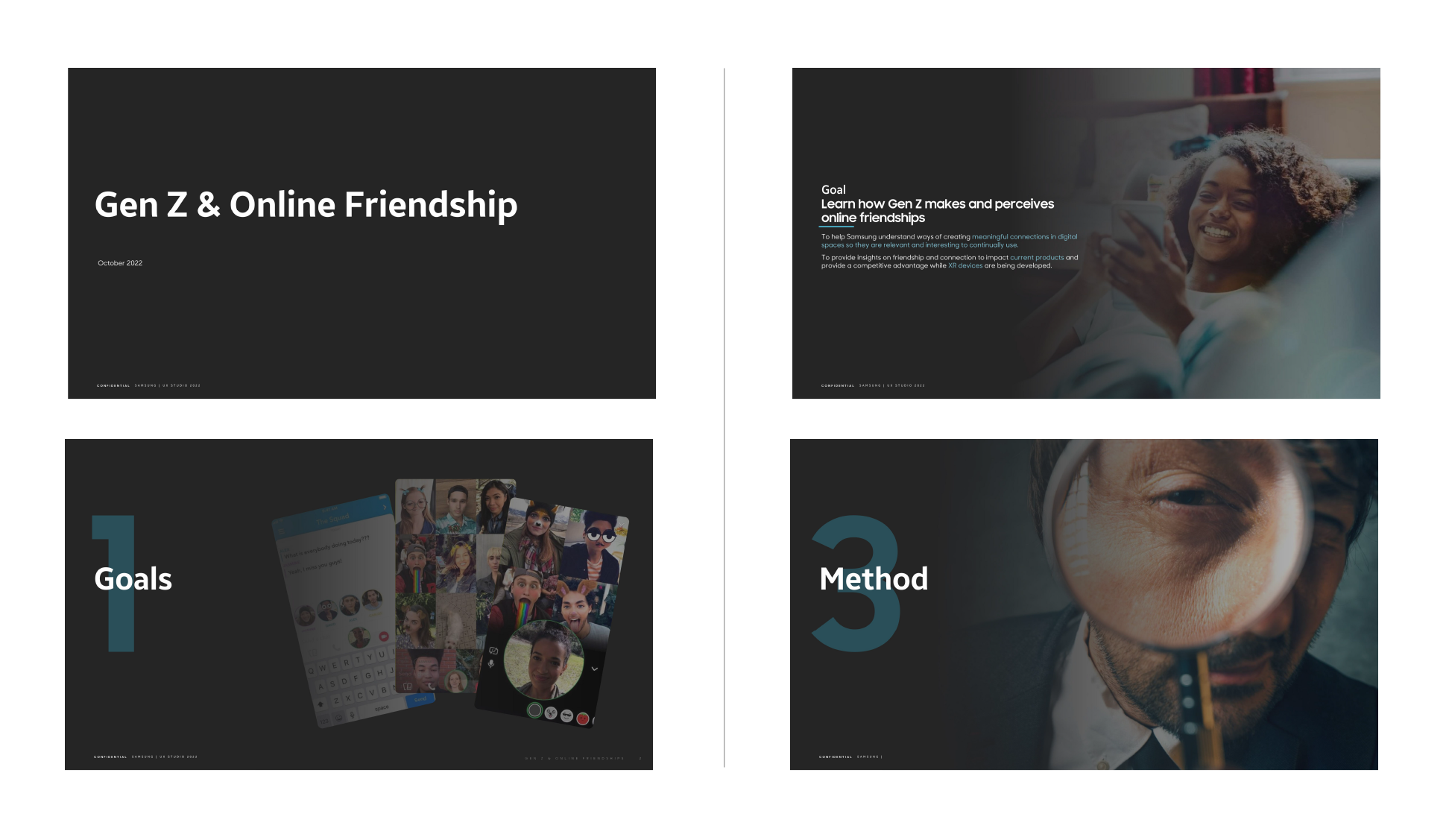
Example slides from the report
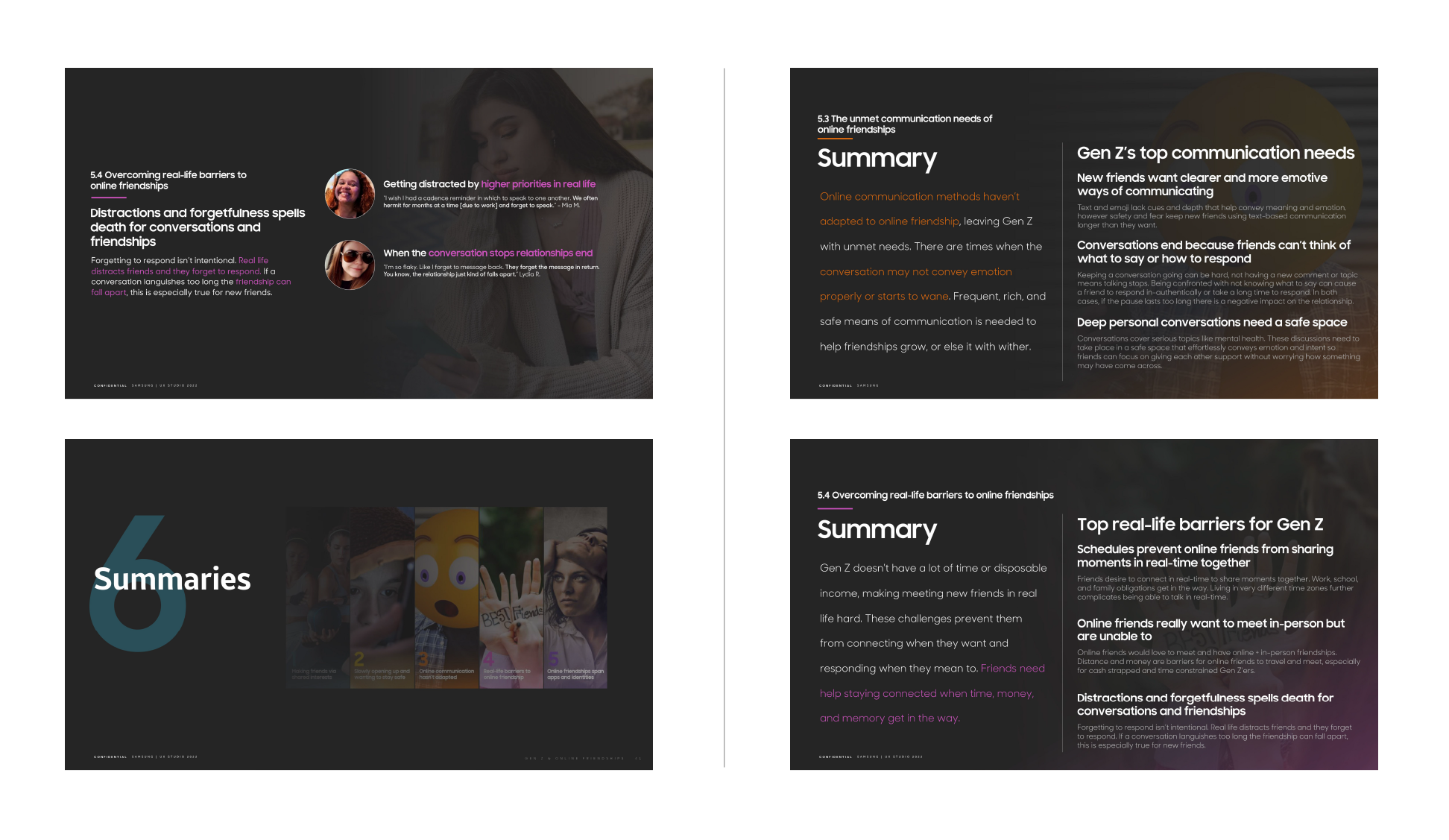
Excerpt From the Full Report
Please delete report after review. Please do not distribute the report.